Категории
Последний блог
Почему ваш выбор бумажной упаковки определяет выживание вашего бренда
Apr 03 , 2026
Для построения устойчивой цепочки поставок необходимо выйти за рамки поверхностной эстетики и углубиться в материаловедение. Бумажные миски с водным покрытием структурная целостность и меняющаяся ситуация с глобальным соответствием требованиям. В этом руководстве мы подробно рассмотрим технические данные, необходимые для принятия обоснованного решения о закупках в 2026 году.
Внутренняя облицовка бумажного контейнера — его важнейший компонент. Она определяет термостойкость, защиту от жира и, в конечном итоге, срок службы продукта. Поскольку глобальные сертификаты «без пластика» становятся все более строгими, понимание этих трех технологий становится обязательным.
Эволюция внутренних барьеров
Традиционный полиэтилен (ПЭ) больше не является золотым стандартом. Вместо него на первый план выходят дисперсии на водной основе и полимеры растительного происхождения. Ниже приведено количественное сравнение наиболее распространенных покрытий на рынке сегодня.
| Показатель эффективности | ПЭ (стандарт) | ПЛА (биопластик) | Водный (на водной основе) |
|---|---|---|---|
| Возможность вторичной переработки | Низкий уровень (сложно удалить) | Только промышленный компост | Высокий (стандартный поток бумажной продукции) |
| Маслостойкость (на уровне комплекта) | 12 (Отлично) | 10 (Хорошо) | 12 (Отлично) |
| Температура тепловой деформации | 95°C | 60°C - 85°C | 105°C (можно использовать в микроволновой печи) |
| Расчетное содержание углерода на единицу | 28,5 г CO2 | 18,2 г CO2 | 12,4 г CO2 |
Настоящий прорыв заключается в переходе к высокоэффективным экологичным суповым тарелкам. В отличие от традиционного ламинирования, водное покрытие наносится как чернила, впитываясь в бумажные волокна и создавая гидрофобный барьер. Это гарантирует, что контейнер действительно не содержит пластика в соответствии с действующими европейскими и североамериканскими нормами.
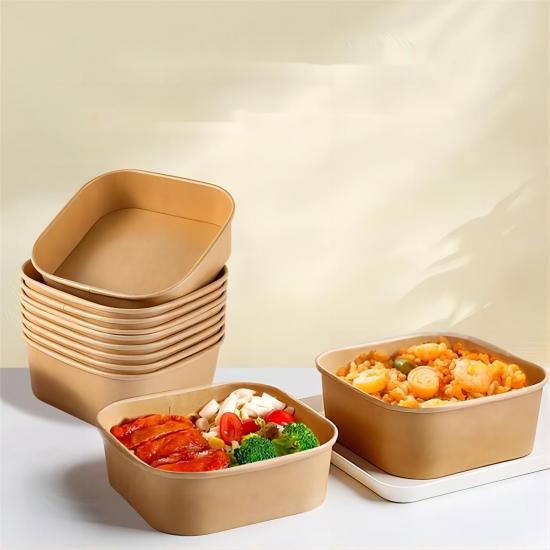
Выбор между круглым или Квадратные бумажные салатницы Часто это воспринимается как стилистическое предпочтение, но на самом деле это оказывает глубокое влияние на эффективность работы и психологию потребителей.
1. «Премиальный» квадратный край
С точки зрения логистики, квадратные контейнеры обеспечивают на 25% лучшее «использование пространства» в сумках для доставки. Данные показывают, что премиальные бренды, использующие квадратные контейнеры,
Квадратные бумажные салатницы
может командовать
на 12–18% выше ценового диапазона
По сравнению с теми, кто использует стандартные круглые контейнеры. Это объясняется «структурированным» визуальным восприятием, которое потребители ассоциируют с высококачественными, организованными блюдами.
2. Структурная физика обода
Для горячих жидкостей "диаметр верхнего края" (например, 115 мм) — это незаметный, но важный параметр. Высококачественный производитель гарантирует допуск в пределах +/- 0,2 мм. Такая точность обеспечивает плотное защелкивание биоразлагаемой крышки со слышимым "щелчком", создавая герметичное уплотнение, предотвращающее протечки при транспортировке.
При проверке поставщика менеджеры по закупкам должны обращать внимание на данные, которые не видны на фотографиях продукции. Структурная целостность — это математическая задача, а не эстетическая.
Плотность бумаги-основы в сравнении с производительностью
Плотность бумаги (г/м²) определяет «прочность на разрыв» контейнера. Если бумага слишком тонкая, пар от горячей пищи вызовет расслабление волокон, что приведет к разрушению структуры.
| Тип контейнера | Стандартный грамм | Премиум-класс | Критическая точка отказа |
|---|---|---|---|
| Чашка кофе | 210 г - 230 г/м² | 280 г - 330 г/м² | Деформируется при 85 °C |
| Салатница | 250 г - 280 г/м² | 300 г - 350 г/м² | Пряжки под давлением |
| Миска горячего супа | 280 г - 300 г/м² | 320 г - 380 г/м² | Протечка снизу |
Ультразвуковая склейка против клеевых соединений
Высококлассный
Биоразлагаемая бумажная упаковка для еды на вынос
На заводах для соединения боковых швов используются ультразвуковые волны вместо химических клеев. Это создает на 30% более прочное соединение и гарантирует, что запахи и химические вещества не проникнут в пищу при повторном разогреве.
Современные потребители ожидают, что смогут разогревать доставленные им блюда прямо в контейнере. Именно здесь стандарты материалов 2026 года отличают лидеров рынка от отстающих.
1. Термическая стабильность водных покрытий
В отличие от PLA-пластика, который может деформироваться или плавиться при температурах выше 60°C, бумага с водным покрытием выдерживает стандартный 2-минутный цикл обработки в микроволновой печи мощностью 800 Вт. Эта стабильность гарантирует сохранение «жесткости» контейнера на протяжении всего процесса использования.
2. Тактильное восприятие и «гаптический» маркетинг
Текстура
Бумажные миски с водным покрытием
Создает ощущение «натурального качества». Исследования потребительского поведения показывают, что тактильные ощущения от органических, непластиковых поверхностей приводят к более высоким оценкам вкуса пищи и доверия к бренду. Для брендов, позиционирующих себя как «здоровые» или «органические», эта тактильная обратная связь является критически важной точкой контакта с брендом.
Многие операторы опасаются «зеленого налога» — повышения стоимости Биоразлагаемая бумажная упаковка для еды на вынос Однако анализ общей стоимости владения (TCO) показывает, что премиальная упаковка в долгосрочной перспективе фактически является мерой экономии средств.
По мере приближения к 2026 году отрасль все больше ориентируется на мономатериальные решения. Цель – создание полностью бумажной экосистемы: крышка, чаша и покрытие – все подлежит переработке в рамках единого потока. Выбирая Биоразлагаемая бумажная упаковка для еды на вынос Ваш бренд соответствует глобальным целям устойчивого развития, не жертвуя при этом эффективностью.
1. Проведите «стресс-тест» аудита.
Перед заключением контракта проверьте имеющиеся контейнеры на устойчивость к воздействию тепла и жира в течение 30 минут. После выдерживания супа при температуре 90°C в течение получаса, миска должна сохранять не менее 90% своей вертикальной прочности.
2. Немедленный переход в группу высокого риска
Переместите пункты меню, содержащие большое количество жидкости и имеющие высокую температуру, в
Экологичные суповые миски для горячего супа
немедленно. Эти товары представляют наибольший риск недовольства клиентов и негативного освещения в социальных сетях.
3. Прозрачность и сертификация
Убедитесь, что на боковой стенке миски четко указаны сертификаты «Без пластика» и «Компостируемость». Прозрачность упаковки так же важна, как и прозрачность в отношении происхождения ингредиентов.
Контейнер — это мост между вашей кухней и столом клиента. Инвестиции в высокое качество больше не являются роскошью, а стали базовым условием выживания в экосистеме общественного питания 2026 года.






Xiamen GLAMAN environmental technology Co., Ltd




 Телефон : +86 18759299872
 Электронное письмо : zheng@glamanpaperlid.com